About 88 per cent of frog species alive today belong to three groups that rapidly diversified just after the asteroid impact that ended the age of the dinosaurs, 66 million years ago. That was the finding of a 2017 genetic study published in the journal PNAS.
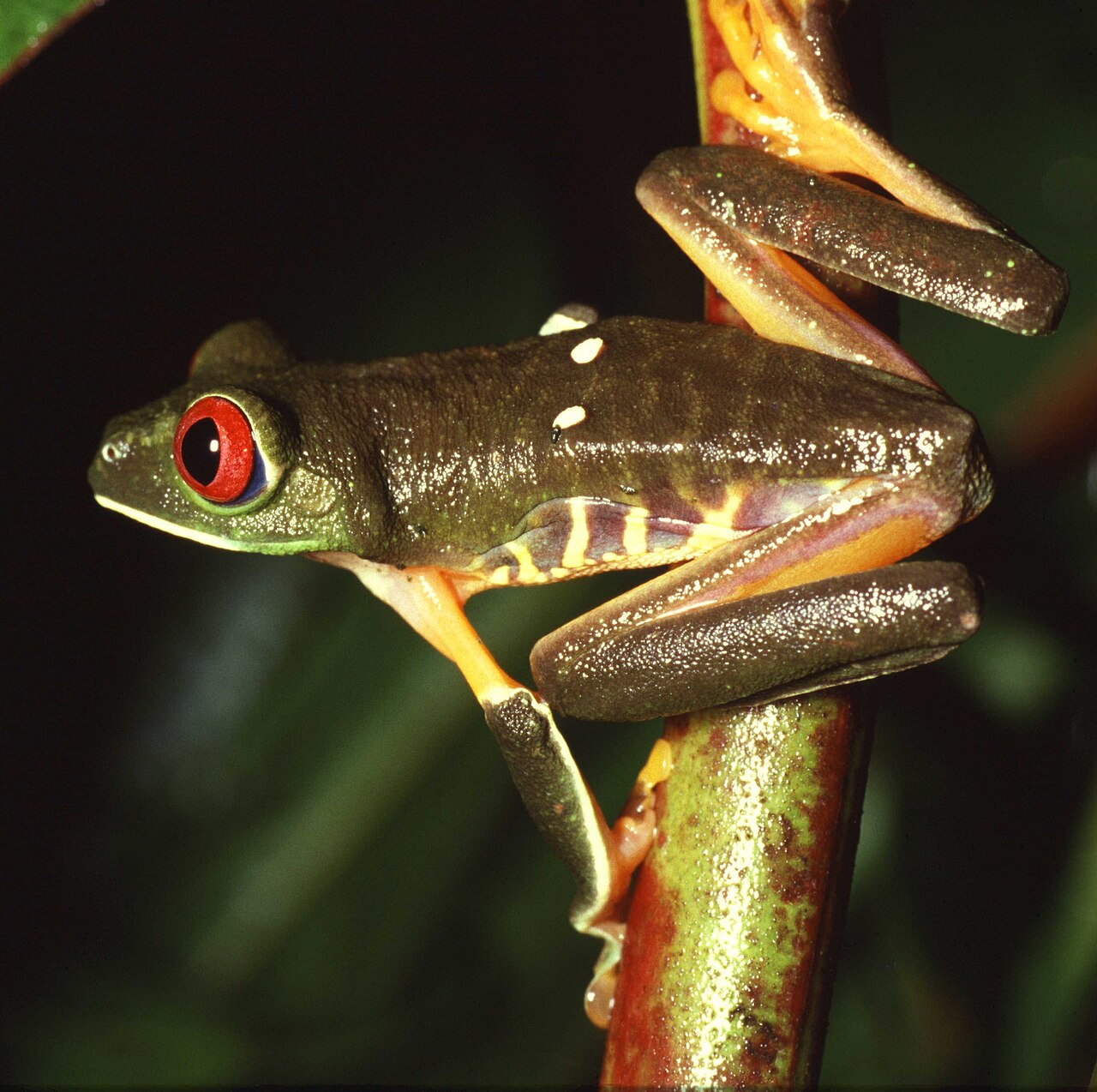
What did the study find?
A team led by Yan-Jie Feng and Peng Zhang of Sun Yat-sen University in China, with David Wake of the University of California, Berkeley, and David Hillis of the University of Texas at Austin, compared 95 genes from frogs in 44 of the 55 living frog families. Using the genetic differences, and fossils to calibrate the timing, they built a family tree of frogs and dated when its branches split.
Earlier studies had suggested the main frog groups arose around 100 million years ago. The new work found that three major groups, known as Hyloidea, Microhylidae and Natatanura, each began to branch out rapidly at almost exactly the same moment: the boundary between the Cretaceous and Paleogene periods, when the asteroid struck.
Why did frogs do so well?
The impact killed about three-quarters of all species on Earth, including all dinosaurs except the ancestors of birds. As forests recovered, the survivors faced fewer competitors and predators and a world of empty niches. The researchers suggested that the spread of flowering plants and new kinds of forest gave frogs many new places to live, from the forest floor to the treetops. Many of today's tree frogs belong to the groups that boomed.
The study could not explain why these three lineages, rather than other frogs that also survived, went on to such success. The authors said that question needed more research.
A pattern in evolution
Frogs are not the only winners of the extinction. Mammals and birds also diversified rapidly once the large dinosaurs were gone. The frog study added to the evidence that mass extinctions, however devastating, can also open the way for new groups of animals to flourish. Today there are more than 7,000 known frog species, although many are now under threat from habitat loss and the deadly chytrid fungus.
Sources
- NPR: How frogs benefited from the dinosaurs' extinction (July 2017)
- University of Texas: Frogs illustrate the creative destruction of mass extinctions (July 2017)
- Florida Museum: Extinction event that wiped out dinosaurs cleared way for frogs (2017)
- ScienceDaily: Frogs and the end of the dinosaurs (July 2017)











Leave a reply