In July 2017, researchers at the Georgia Institute of Technology reported a strange discovery. When fire ants need to climb out of trouble, they link their bodies together to build towers, shaped rather like the Eiffel Tower. But by accident, the scientists found something even stranger: the towers were sinking all the time, and the ants were constantly rebuilding them. It is a perfect example of how a colony of tiny insects can behave like a single, problem-solving organism.
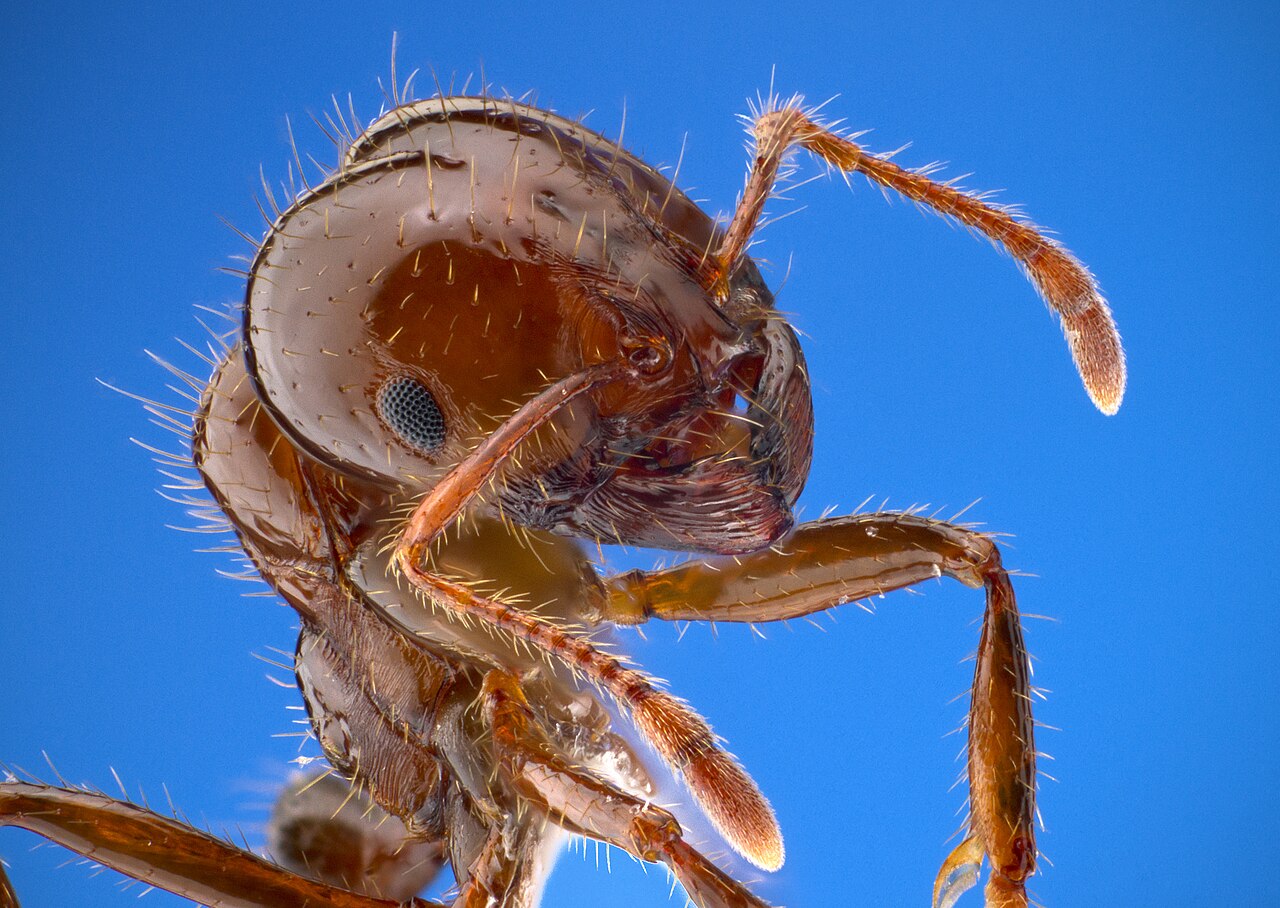
How do fire ants build towers?
The study, published in Royal Society Open Science, looked at how fire ants build towers around a vertical rod, as they might around a plant stem during a flood. Using high-speed video, the team found that each ant can comfortably support the weight of about three others. That simple rule makes the tower wide at the bottom and narrow at the top.
The discovery that the towers were sinking came by chance. "We accidentally left the video camera running for an extra hour after the ants had finished building their tower," researcher Craig Tovey told Live Science. The footage showed that ants inside the tower were constantly tunnelling out of the bottom, while others climbed up the outside to keep it standing. The tower stayed the same shape, but its ants were always on the move.
Living rafts
The towers were not the team's first discovery. In 2011, the same Georgia Tech group showed that when their nest floods, fire ants grip each other with their jaws and legs to form a living, waterproof raft. Air trapped among their bodies keeps the raft afloat, and if an ant is removed, others move in to fill the gap. A colony can float like this for days until it reaches dry land. Later research found that the ants are drawn together on water by the "Cheerios effect", the same force that makes breakfast cereal clump together in a bowl of milk.
Scientists are interested in all this for more than curiosity. Engineers designing swarms of small robots study fire ants for clues about how simple units can build complex structures without a leader.
Why they are a problem
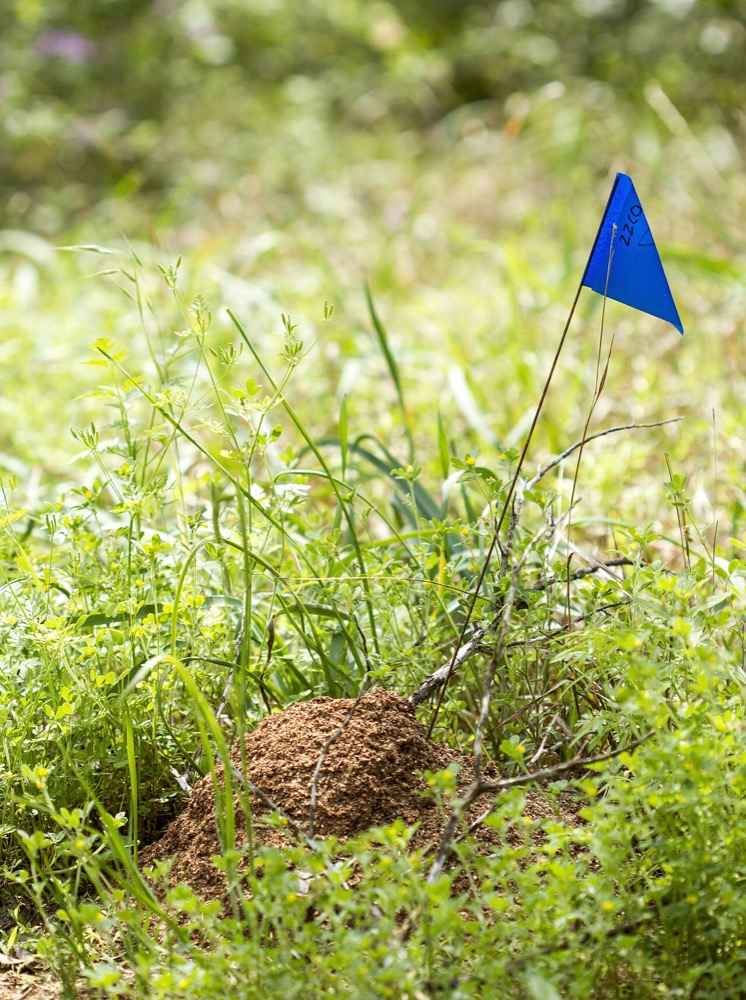
The same teamwork that makes fire ants fascinating also makes them one of the world's most damaging invasive species. Originally from South America, red imported fire ants spread to the southern United States in the early 20th century and have since reached other countries. Their painful stings can injure people and pets, and they damage crops, wildlife and electrical equipment.
Australia has been fighting them since they were found in Brisbane in 2001. Its National Fire Ant Eradication Program aims to wipe them out by 2032, but the infestation in south-east Queensland has grown to cover hundreds of thousands of hectares, and since 2023 the ants have been detected across the border in New South Wales. A 2026 study even warned that the large-scale baiting used to fight them may be doing more harm than good.
Nine years on
The sinking towers discovered in 2017 are a reminder that even the smallest creatures can do remarkable things. For the people trying to stop fire ants spreading, though, those same abilities are exactly what makes them so hard to beat.
Sources
- Georgia Tech: Sinking ant towers (2017)
- Live Science: Fire ants build sinking "Eiffel Towers" from their own bodies (July 2017)
- ScienceDaily: Fire ants perpetually rebuild sinking towers (July 2017)
- National Geographic: Fire ants assemble into living waterproof rafts
- Georgia Tech: Fire ant rafts form thanks to the "Cheerios effect"
- Australian Government: Red imported fire ant outbreak
- Southern Cross University: Fire ant eradication attempts may be helping the invader spread (2026)









Leave a reply