No. The International Space Station's live feed regularly drops out when the station switches between relay satellites, and NASA has said these cuts are routine, not deliberate. US government investigations into unidentified objects have so far found no evidence of alien technology.
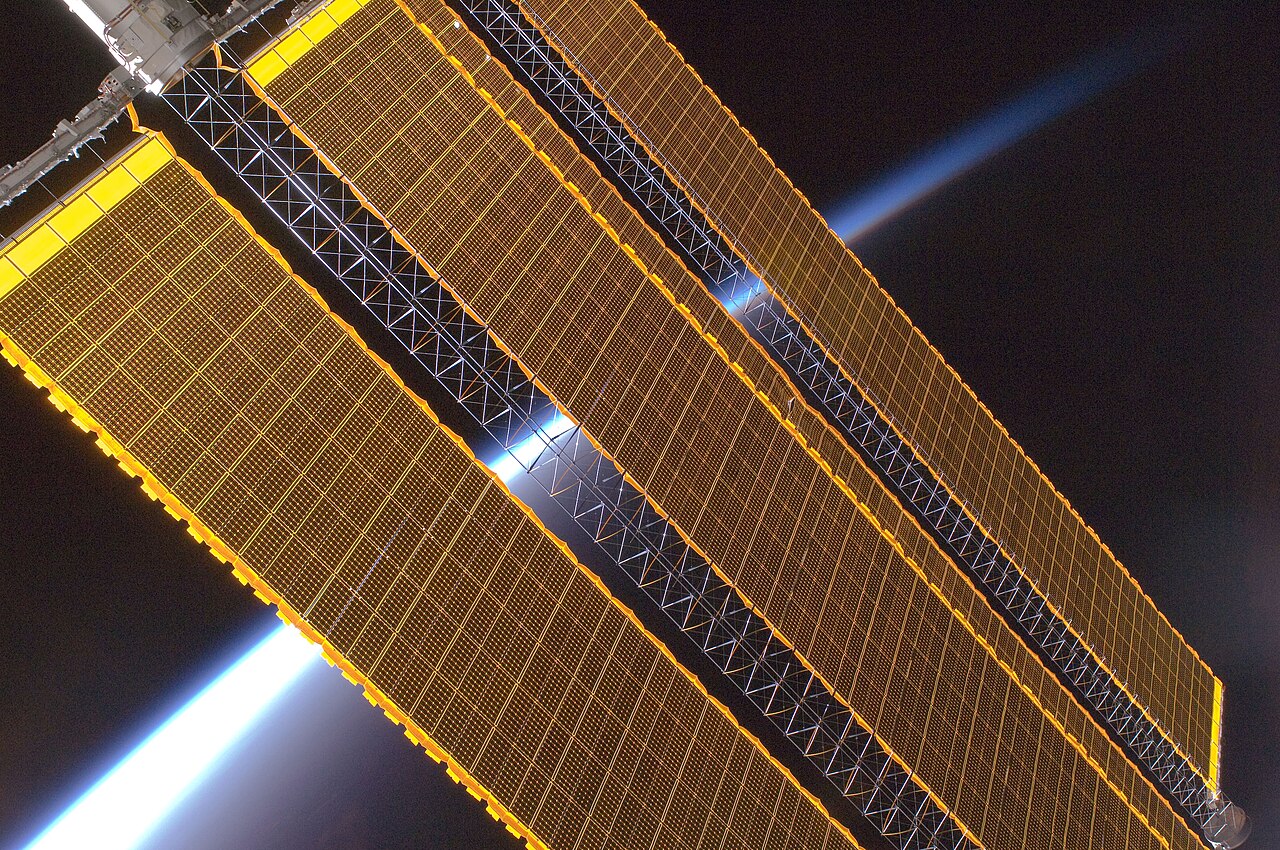
Why does the space station feed go dark?
The station sends video to the ground over a high-bandwidth radio link that runs through a network of relay satellites. When the station's antenna has to hand over from one satellite to another, or something blocks the signal, the link drops for anything from seconds to minutes. Viewers then see a blue screen or a "loss of signal" slide. Because the feed is live and the station orbits Earth every 90 minutes, this happens many times a day.
In 2016, a clip spread online in which bright objects appeared near Earth's horizon shortly before the feed cut out. NASA denied cutting it on purpose and said it was a routine loss of signal. Lights in such clips are usually reflections, sunlit debris, ice particles, satellites or meteors, seen from a moving camera behind a window.
The official investigations
Since then, the US government has taken the subject more seriously, though under a new name: unidentified anomalous phenomena, or UAP.
- 2021: a report from the US intelligence agencies reviewed 144 sightings, mostly by military pilots, and could explain only one, a deflating balloon. Officials said the rest lacked enough data.
- 2022: the Pentagon set up a permanent office, the All-domain Anomaly Resolution Office (AARO), to investigate reports.
- 2023: a former intelligence official told a congressional hearing that the US had a secret programme to recover crashed alien craft. NASA's own independent study panel reported that September that it had found no evidence UAP were extraterrestrial, and called for better data.
- 2024: AARO published a historical review going back to 1945. It found no evidence that the US government had ever recovered alien technology, and said many sightings were balloons, drones, satellites or secret aircraft.
- 2026: AARO's latest annual report, released in July, covered 319 new cases and again rejected claims that the government holds recovered alien material.
So are we alone?
That remains one of science's biggest open questions. Astronomers are searching for signs of life on planets around other stars, and for radio signals. But the evidence from UFO investigations so far points to ordinary explanations, or to cases where there simply is not enough information to say.














Leave a reply