Few kitchen jobs are as reliably tearful as chopping an onion. The internet is full of tips to avoid it, from chewing gum to holding bread in your mouth to cutting onions under a running tap. Some of them help a little; many do not. The good news is that scientists now understand exactly what is going on, and recent research points to a remarkably simple solution.
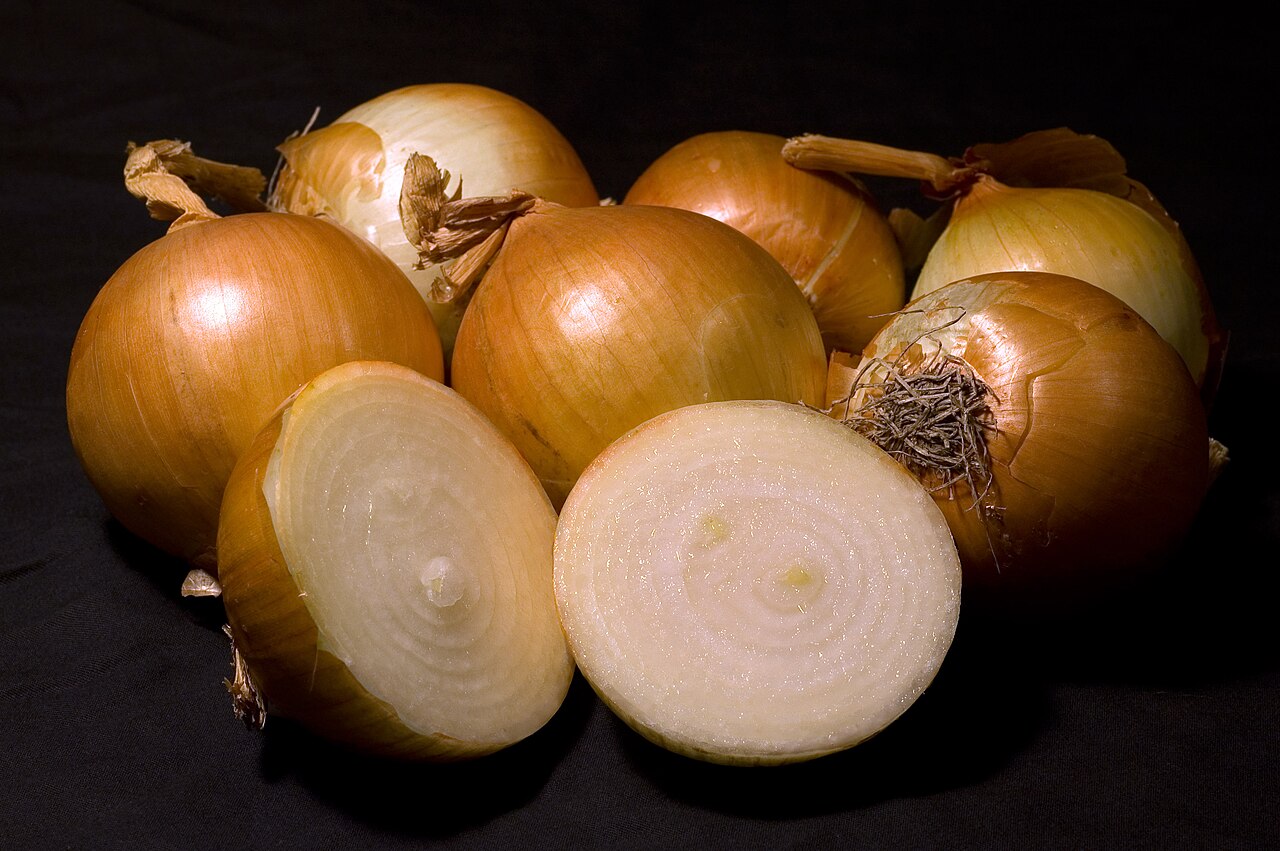
Why do onions make you cry?
An onion's tears are a chemical defence. Inside its cells are sulphur-containing compounds and, kept separately, enzymes. When you cut through the cells, they mix. One of the reactions produces a gas called syn-propanethial-S-oxide, known as the "lachrymatory factor". When it drifts up and reaches your eyes, it irritates the nerves there, and your eyes produce tears to wash it away.
The enzyme that makes the tear-gas, lachrymatory factor synthase, was identified by Japanese scientists in 2002. In 2017, researchers at Case Western Reserve University in the US worked out its structure and exactly how it does the job, which could help plant breeders develop onions that make fewer tears.
The sharp-knife discovery
In 2025, researchers at Cornell University, including engineer Sunghwan Jung, used high-speed cameras and a miniature onion "guillotine" to film what happens when a blade cuts an onion. They found that cutting forces out tiny droplets of onion juice, which can fly up at speed and carry the irritating chemicals towards your face.
Crucially, blunter blades and faster cuts produced many more droplets, and more energetic ones. Sharp knives and slow, steady cuts produced far fewer, and kept most of them from rising to eye level. The study was published in the journal Proceedings of the National Academy of Sciences.
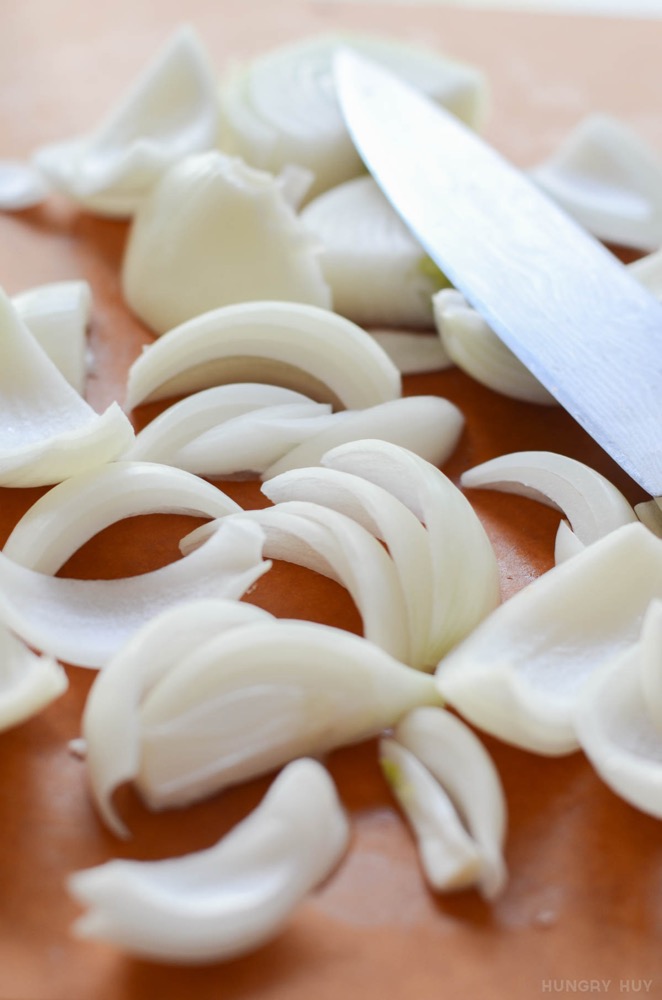
What actually works
- Use a sharp knife and cut slowly. This is the tip with the best scientific support. A sharp blade slices cleanly through cells instead of crushing them.
- Chill the onion first. The US National Onion Association recommends putting onions in the fridge before cutting, which slows the release of the irritating chemicals.
- Keep your face away. Working at arm's length, with a fan or open window nearby, helps the gas disperse before it reaches you.
- Goggles or water. Cutting under water or wearing well-fitting goggles does work, but is fiddly, and soaking onions can wash away some flavour.
Tricks like chewing gum or holding bread in your mouth have little evidence behind them.
Tearless onions
Some plant breeders have tried to remove the problem at its source. In 2018, the seed company Bayer launched Sunions in the US, onions developed over about 30 years of traditional cross-breeding that become less tear-inducing the longer they are stored. A Japanese company has also developed a tearless onion. They remain much less common than ordinary onions, so for most cooks a sharp knife and a little patience remain the best defence.
Sources
- Library of Congress: Why does chopping an onion make you cry?
- ScienceDaily: The nitty-gritty behind how onions make you cry (2017)
- Wu, Jung et al.: Droplet outbursts from onion cutting (2025)
- Physics World: The physics behind why cutting onions makes us cry (2025)
- NPR: Stop crying! Tear-free onions are here (2018)














Leave a reply