TRAPPIST-1 is a small, cool star about 40 light years from Earth with seven rocky, roughly Earth-sized planets. Since 2017, the James Webb Space Telescope has found that the two innermost planets have no thick atmosphere. Whether any of the others could support life is still unknown.
The 2017 announcement
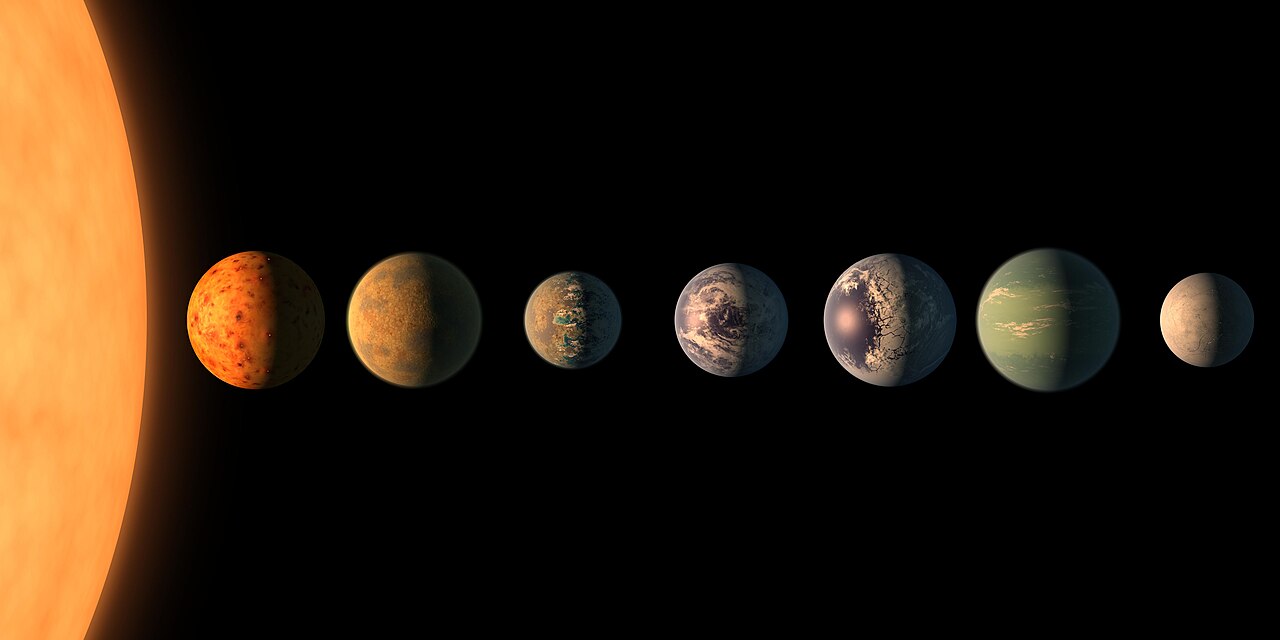
On 22 February 2017, an international team led by Belgian astronomer Michaël Gillon announced in the journal Nature that TRAPPIST-1 had seven planets. Three had been spotted in 2016 with a small Chilean telescope called TRAPPIST, which gave the star its name. NASA's Spitzer Space Telescope found the rest. The astronomers detected them by watching the star dim slightly each time a planet passed in front of it.
It was the largest group of Earth-sized planets ever found around a single star. Three of them, known as TRAPPIST-1 e, f and g, orbit in the star's "habitable zone", where temperatures could in theory allow liquid water on the surface.
Why is TRAPPIST-1 so unusual?
The whole system would fit inside the orbit of Mercury. TRAPPIST-1 is an ultracool red dwarf, only slightly larger than Jupiter and far dimmer than the Sun, so its planets must huddle close to it to stay warm. Their years last between about 1.5 and 19 days. They are also probably tidally locked, with one side always facing the star, like the Moon facing Earth.
What has the Webb telescope found?
The James Webb Space Telescope, launched in December 2021, made TRAPPIST-1 one of its early targets. The results so far:
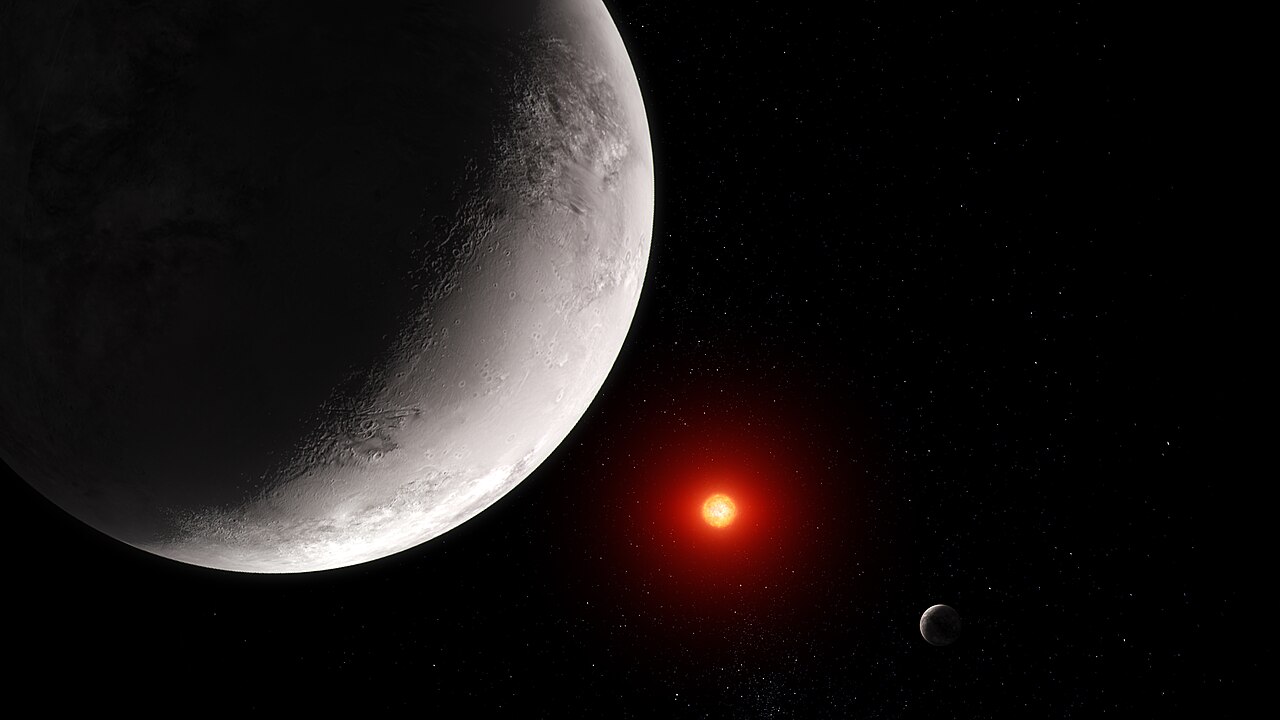
- TRAPPIST-1 b and c: measurements of heat from the two innermost planets, published in 2023, showed no sign of a thick, carbon dioxide-rich atmosphere like that of Venus. They may be bare rock, or have only very thin air.
- TRAPPIST-1 e: in September 2025, researchers published the first Webb results for this habitable-zone planet. They found it is unlikely to have a Venus-like or Mars-like atmosphere, or the hydrogen envelope it may have started with. The data hinted at a nitrogen-rich atmosphere with traces of methane, but the signal was weak, and the planet could still be bare rock. More observations are under way.
The big obstacle: an angry star
Small red dwarfs like TRAPPIST-1 are prone to powerful flares, especially when young. Over billions of years, that radiation could strip the atmospheres from close-in planets. Webb's results so far fit that worry, but they also show that astronomers can now study the air of rocky planets around other stars, something that was out of reach when the system was announced. TRAPPIST-1 remains one of the best places to look for the first signs of a habitable world beyond our solar system.
Sources
- Space Telescope Science Institute: NASA Webb looks at Earth-sized, habitable-zone exoplanet TRAPPIST-1 e (2025)
- MIT News: Habitable-zone planet unlikely to have a Venus- or Mars-like atmosphere (2025)
- Universe Today: JWST results suggest TRAPPIST-1e might have a methane atmosphere (2025)
- NASA: TRAPPIST-1








Leave a reply