Yes, there is a large hidden space inside the Great Pyramid of Giza. In November 2017, the ScanPyramids team announced a void at least 30 metres long above the pyramid's Grand Gallery. Nobody has entered it, and nobody yet knows what it was for.
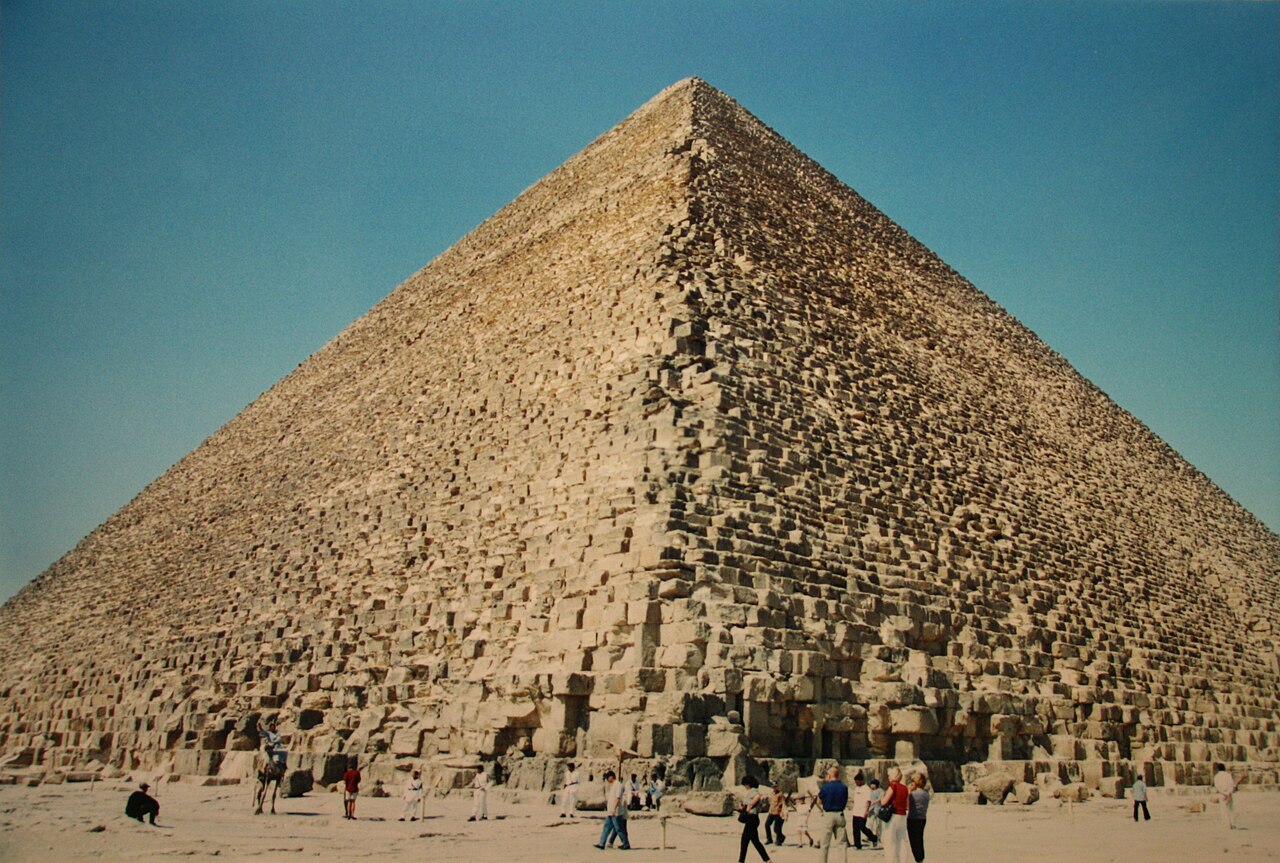
How do you see inside a pyramid?
You use particles from space. Cosmic rays hitting the upper atmosphere create a steady shower of particles called muons, which pass through rock but are slowly absorbed by it. Detectors placed inside and around the pyramid count how many muons arrive from each direction. Where more get through than expected, there must be less stone in the way: an empty space.
The ScanPyramids project, led by Cairo University and the Paris-based HIP Institute with teams from Japan and France, used three different kinds of muon detector. All three spotted the same excess of muons above the Grand Gallery, the tall sloping passage that leads to the King's Chamber.
What is the Big Void?
The Big Void is a cavity at least 30 metres long, similar in size to the Grand Gallery itself, which is 47 metres long and 8 metres high. The results were published in the journal Nature on 2 November 2017. It was the first major new structure found inside the Great Pyramid since the 19th century.
The researchers were careful about what they could not say. The muon data cannot show whether the void is one chamber or several, whether it slopes or lies flat, or what the builders meant it for. Ideas range from a construction space used to raise heavy blocks to a gap that relieved the weight on the Grand Gallery's roof. No one has proposed a way to reach it without damaging the monument.
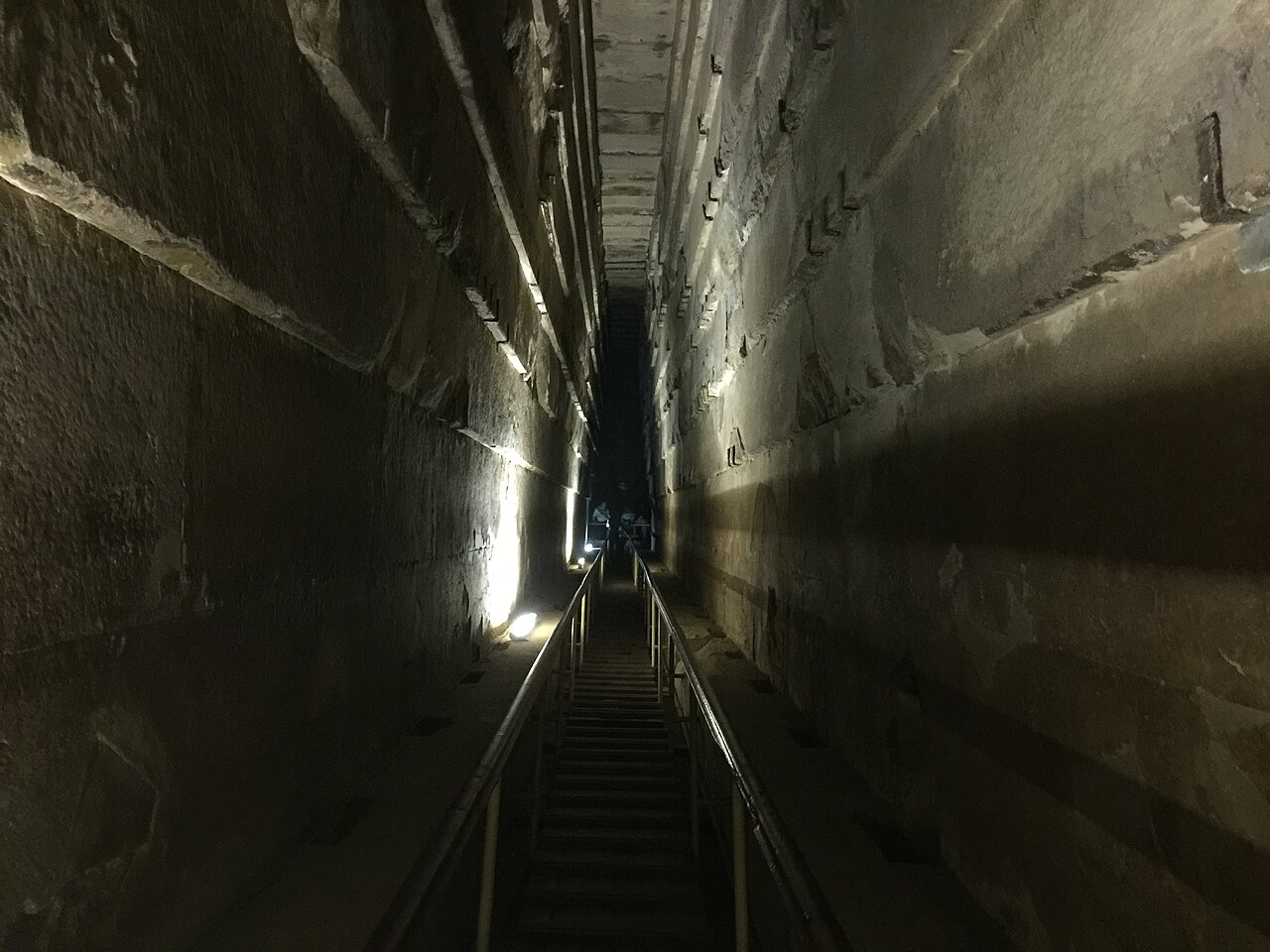
The corridor caught on camera
The same technique found a smaller space behind the large stone chevrons above the pyramid's original entrance on its north face. In March 2023, Egypt's antiquities ministry announced that the team had filmed it. They pushed an endoscope, a camera just 5 millimetres wide, through a joint between the blocks, and saw an empty corridor with a gabled stone roof. A study in Nature Communications measured it at about 9 metres long and 2 metres wide.
The corridor may have been built to take weight off the entrance below, but it could also lead somewhere. Researchers are studying whether it connects to anything further inside.
The search moves next door
Similar methods are now being used on the other Giza pyramids. In late 2025, researchers from Cairo University and the Technical University of Munich reported two air-filled spaces behind the east face of the Pyramid of Menkaure, the smallest of the three, which they say could point to a second entrance.
Nearly ten years after the first announcement, the Big Void remains sealed and unexplained. For one of the most studied buildings on Earth, the Great Pyramid still has secrets.
Sources
- CEA: ScanPyramids discovery of an internal structure within the Pyramid of Cheops (2017)
- Smithsonian: Massive void found within the Great Pyramid of Giza (2017)
- Archaeology: Camera glimpses hidden corridor in Egypt's Great Pyramid (2023)
- Sci.News: Cosmic-ray muons reveal hidden structure in Khufu's pyramid (2023)
- Technical University of Munich: Air-filled anomalies in the Menkaure Pyramid (2025)








Leave a reply