There has been international condemnation of the suspected gas attack in northern Syria, which has left more than 80 people dead, including up to 30 children.
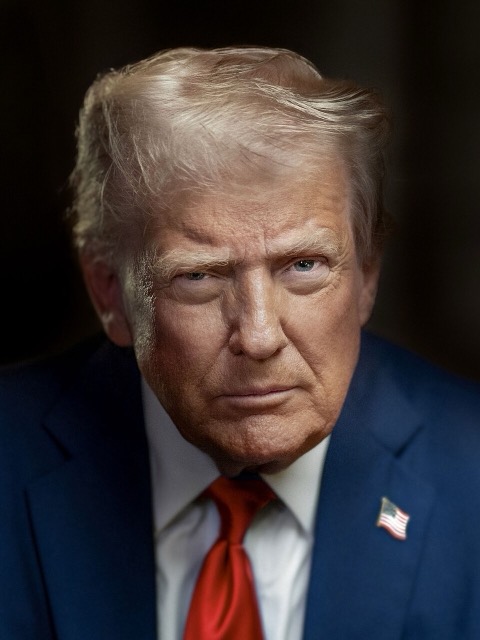
The Prime Minister has called the attack “despicable”, while Donald Trump denounced it as an “affront to humanity”, blaming Syrian president Bashar al Assad and saying it “cannot be tolerated”.
As calls for a swift investigation into the attack grow, we take a look at the key players in the Assad regime.
President Bashar al Assad
The 51-year-old initially, trained as a doctor, and as a postgraduate spent time in London specialising in eye problems.

Investigations by the UN and World Health Organization are currently taking place
His elder brother Bassel, the heir apparent to their father Hafez al Assad, was killed in a car crash in 1994.
Bashar succeeded his father as president in July 2000.
Originally touted as a potential reformer, his part in the crackdowns on Arab Spring protesters, which led to the Syrian Civil War, led to calls from the EU and US for him to stand down.
In 2013, the UN directly implicated Mr Assad in war crimes for his role in the Syrian conflict.
In 2017, he was named on a list produced by the International Criminal Court (ICC) as one of the 15 people “to be scrutinised in relation to use of CW (chemical weapons) by Syrian Arab Republic Armed Forces in 2014 and 2015”.
His wife, Syria’s first lady Asma al Assad, who was born in Acton and educated at King’s College London, said during an interview last year that she has been offered “financial security” outside of Syria, but refused to leave as she did not want to “shatter people’s confidence in their president”.
Maher al Assad, military commander

Military commander Maher al Assad
Mr Assad’s younger brother and right-hand man commands the army’s elite fourth armoured division.
The 49-year-old appeared to have been demoted to ‘Brigadier General’ in 2016, but in January 2017 he was promoted to the rank of Major General.
He reportedly lost a leg during an attack on Syria’s security cabinet in Damascus in 2012.
He is also named on the ICC chemical weapons list.
Walid al Mouallem, foreign minister

Foreign minister Walid Muallem
Mr Mouallem became foreign minister in 2006.
He led the Syrian official government delegation to peace negotiations in Geneva with representatives of the opposition, but two rounds of peace talks mediated by the UN failed to bring the sides closer.
Mr Moualem has denied government involvement in the chemical assault on Khan Sheikhoun.
He echoed the Russian government’s claim that the army bombed an arms depot belonging to al Qaeda affiliate, the al Nusra Front, now known as the Fateh al Sham Front.
General Issam Hallaq, Syrian Air Force chief
Mr Hallaq took the role of air force chief of staff in 2010. The EU imposed sanctions on Mr Hallaq in 2012 and he’s also named on the ICC chemical weapons list.
Dr Najah al Attar, vice president of Syria

Vice president Najah al Attar
Born in 1933, Ms Attar is from a Sunni family, and the first woman to hold such a high position in Syria.


Leave a reply